Timing Is Everything: How Bookmakers Strategically Deploy Limited-Time Offers to Influence Betting Volume Across Different Sports
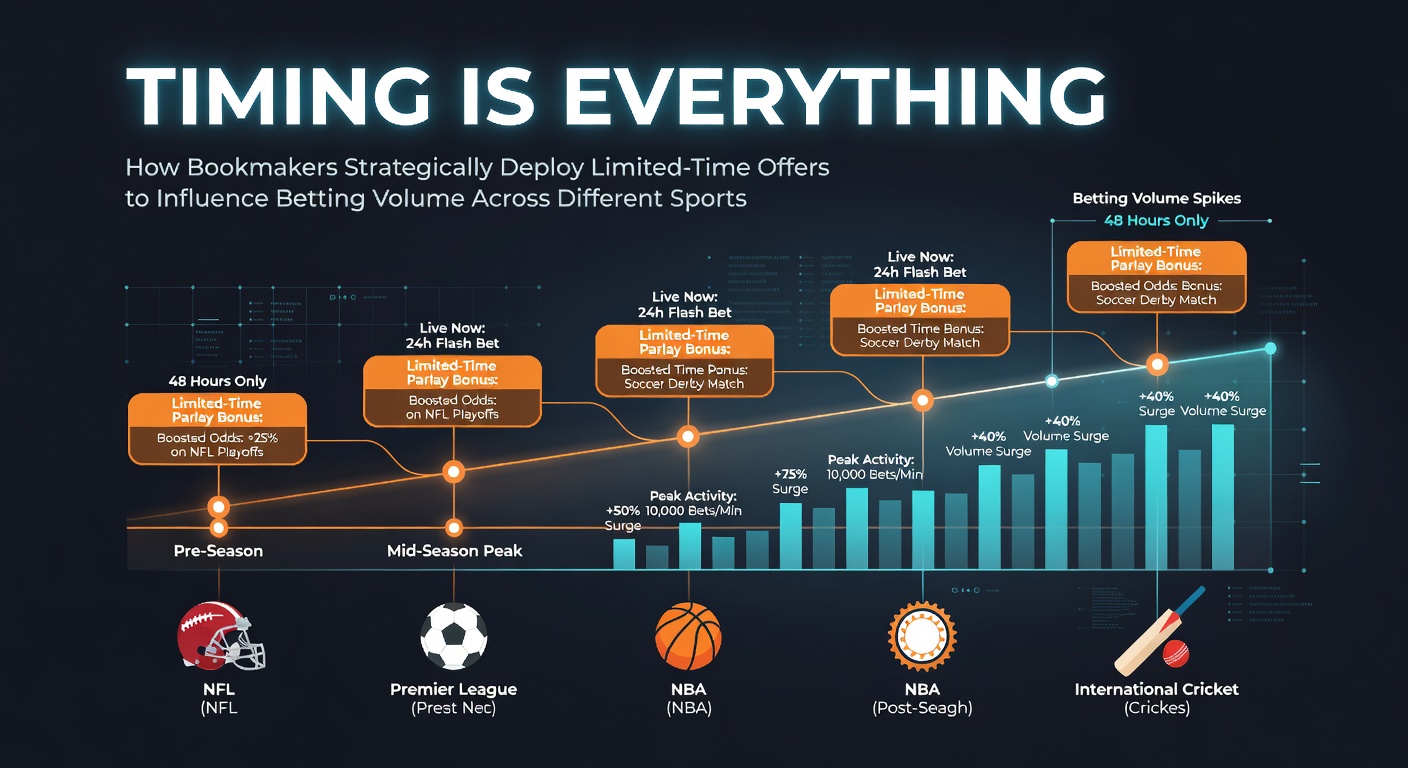
Bookmakers have refined their use of limited-time offers over the years, deploying them at precise moments to shift betting patterns and increase overall volume across major sports. These promotions often appear in short windows tied to specific events, and operators adjust the timing based on historical data that shows when bettors are most responsive. Research from industry analysts indicates that such offers can raise participation rates by 15 to 30 percent during peak promotional periods, particularly when they align with high-profile matches or tournaments.
Strategic Windows in Football and Soccer Markets
Football promotions frequently launch in the hours before kickoff or during midweek fixtures when audience attention peaks, and operators use flash bonuses to encourage live betting rather than pre-match wagers alone. Data collected across European leagues shows that offers released between 6 pm and 9 pm local time generate the highest engagement because they coincide with after-work viewing habits, while similar incentives placed earlier in the day see lower uptake. In May 2026, as several domestic seasons reach their final stages, bookmakers are expected to intensify these timed campaigns to capture residual interest before the summer break begins.
Operators also stagger their offers across different competitions, releasing one set of incentives for domestic leagues and another for European club events on the same weekend. This approach prevents overlap fatigue and maintains steady volume, since bettors encounter fresh promotions rather than repeated messages about the same fixtures. Studies conducted by the European Gaming and Betting Association reveal that staggered timing across markets sustains longer engagement periods than single-blast campaigns.
Adjustments for Tennis, Basketball, and Other Individual Sports
Tennis tournaments present a different challenge because matches can run for several hours or end abruptly, so bookmakers release in-play offers that activate only after a set or during extended breaks. These time-sensitive boosts often target tie-break betting or next-game markets, and operators monitor live scores to trigger promotions within minutes of key moments. Observers note that basketball operators follow a similar pattern during NBA playoff runs, where limited-time odds enhancements appear in the final two minutes of quarters when momentum shifts quickly and volume spikes naturally.
Cricket and rugby promotions tend to focus on session breaks or innings changes because those intervals create natural pauses when bettors check updates and decide on additional stakes. Limited-time credits released exactly at these breaks convert into higher in-play activity than promotions sent at random intervals, according to figures released in recent operator performance reviews. The same principle applies to combat sports, where pre-fight offers close minutes before the opening bell to create urgency without extending into the event itself.
Seasonal and Off-Peak Timing Tactics
During quieter months bookmakers shift their focus to emerging or niche sports, releasing offers that coincide with the start of new seasons or major international events. These campaigns often begin several days before opening matches and taper off once regular fixtures establish predictable betting rhythms. Research indicates that early-season offers produce stronger volume lifts in leagues with shorter schedules because bettors have fewer opportunities to engage later.
Operators also monitor weather patterns and venue changes that can delay events, adjusting promotion windows accordingly so that offers remain relevant even when start times shift. This flexibility prevents wasted incentives and keeps betting activity consistent across disrupted schedules. Data from multi-sport operators shows that adaptive timing reduces the number of unused promotional credits compared with fixed schedules.
Cross-Sport Coordination and Volume Management
Bookmakers running multiple verticals coordinate their limited-time offers to avoid simultaneous launches that might split attention. Instead they sequence promotions so that football incentives run in the evening while tennis or basketball offers activate earlier, creating a rolling cycle that maintains platform traffic throughout the day. Industry reports from bodies such as the Victorian Responsible Gambling Foundation highlight that sequenced timing across sports correlates with steadier daily betting volumes rather than sharp peaks followed by troughs.
Tracking tools inside betting platforms record which offer windows produce the strongest response rates, allowing operators to refine future deployments based on actual user behavior rather than assumptions. These adjustments often involve shortening or extending promotion durations by as little as fifteen minutes to capture additional volume without increasing overall bonus liability.
Conclusion
Timing remains a central lever that bookmakers use to shape betting volume across sports, with operators refining their schedules through continuous analysis of user data and event calendars. Limited-time offers succeed when they align with natural attention peaks, whether those occur before kickoff, during set changes, or at season transitions. As schedules evolve into 2026, operators continue to test and adjust these windows to maintain consistent engagement while managing promotional costs across different markets.